Design & Planning Journey
Translating regenerative principles into a new reality
Design &
Planning
Journey
Translating regenerative principles into a new reality
Designing a new village is a careful and collaborative process. It means listening to the land, learning from the local context, and bringing together many different kinds of knowledge - from architecture and landscape design to ecology, energy systems and water management.
Since late 2025 we have been working with a team of architects and specialist consultants to shape the emerging design of the village.
This work involves developing a masterplan for the village and studying many practical aspects of how it could function - from energy and transport to biodiversity, drainage and water systems.
This page shares how the design work is unfolding, who is involved, and how the village is being shaped step by step.
Designing the Village Together
We are not handing a brief to architects and waiting for drawings to appear.
We are shaping this village step by step - with the people who care about it, and with the land itself.
Co-design is an ongoing process of listening, testing, refining and consenting. Here is how it has unfolded so far.


Listening First (2023–2026)
Before any plans were drawn, we listened.
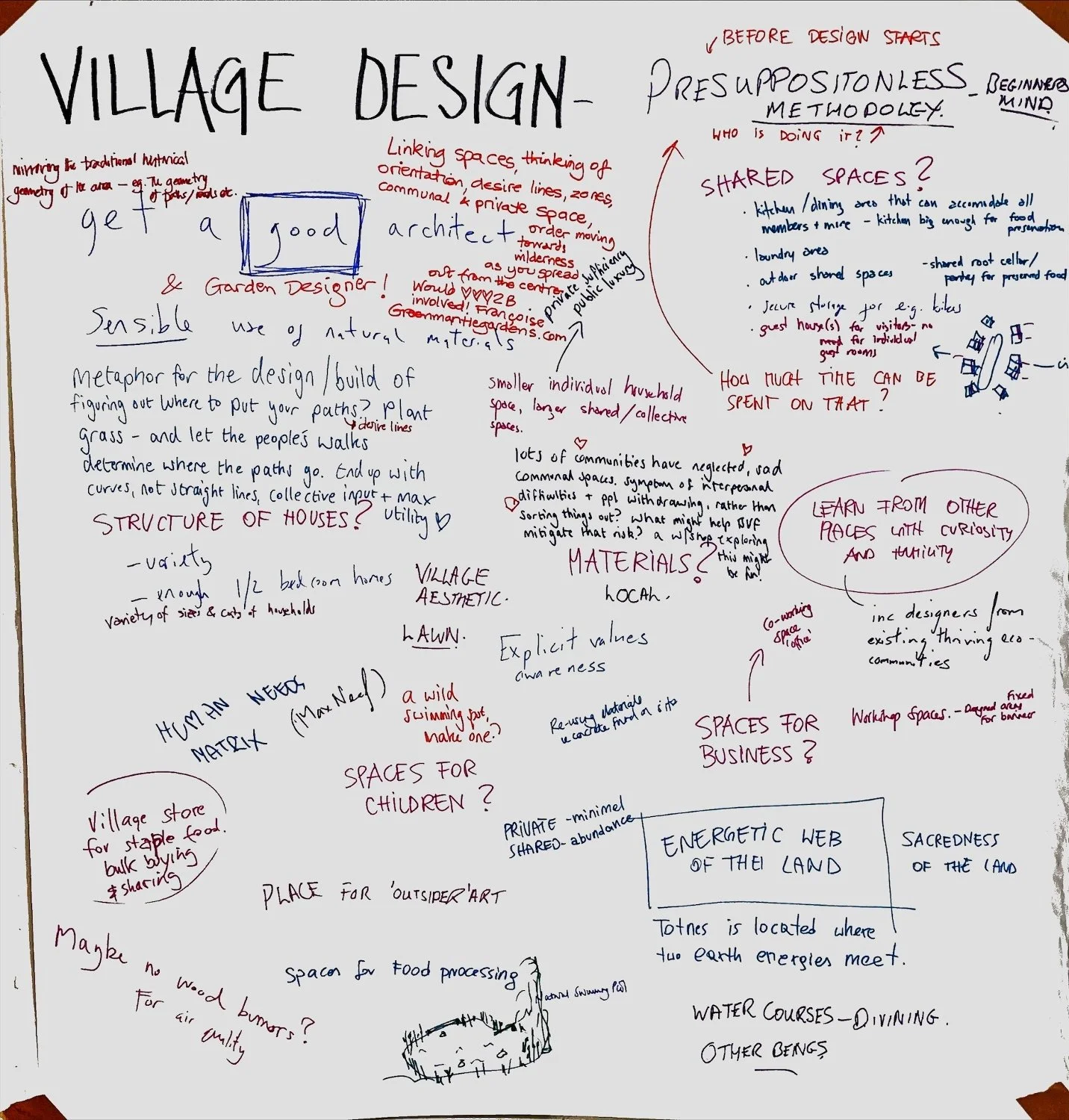
For two years we invited people to tell us what they need from community, from their home.
Over 300 people responded to our village survey wanting to live here.
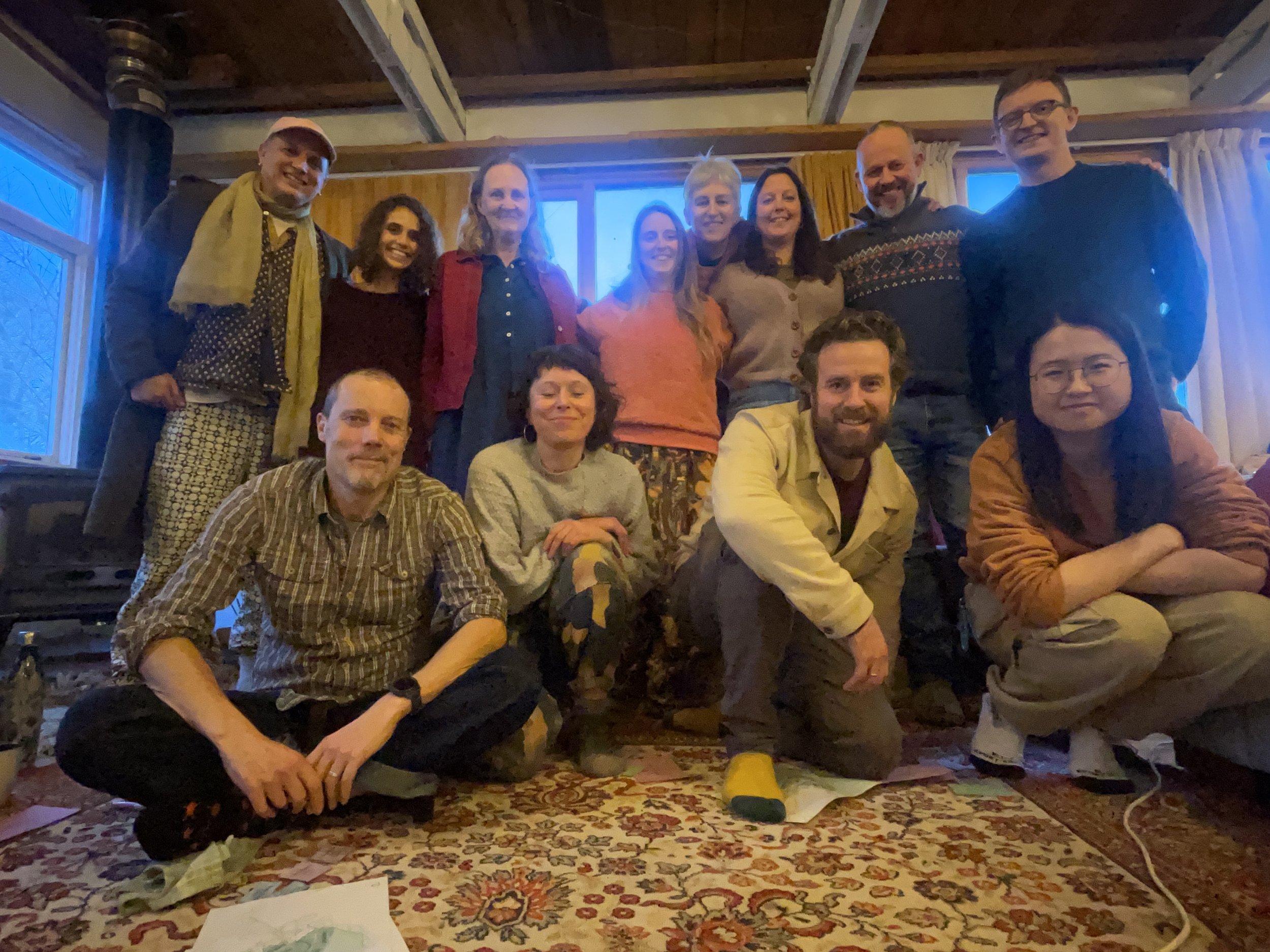
We held seven co-shaping gatherings open to anyone to explore what kind of village we want to live in, what we will share and what households need for themselves, and what regenerative living means in everyday life.
More recently we held 2 Open Days in Totnes for local people to take part in discussions, comment boards and voting exercises about what matters most them.
We ran a family day so children and parents could imagine village life together.
All of this shaped the task we set our architects.
Read about our Co-Shaping Gatherings
Read about Open days (coming soon)
2. Creating Design Team
Our design team brings together regenerative design expertise, professional specialists and voices from the project community.
As part of this process we appointed Team Transition (Transition by Design and Incremental) as the lead architects - two architecture workers co-operatives specialising in community-led and regenerative design approaches.
From the beginning, the intention has been to work in a collaborative and co-creative way, where designers, project members and specialists contribute their knowledge to shape the village together.
Many of us value this way of working. It creates a process that feels open, balanced and grounded in shared purpose — something that naturally carries through into the decisions we make about the future village.
3. Co-Designing
We are not simply clients. We are collaborators.
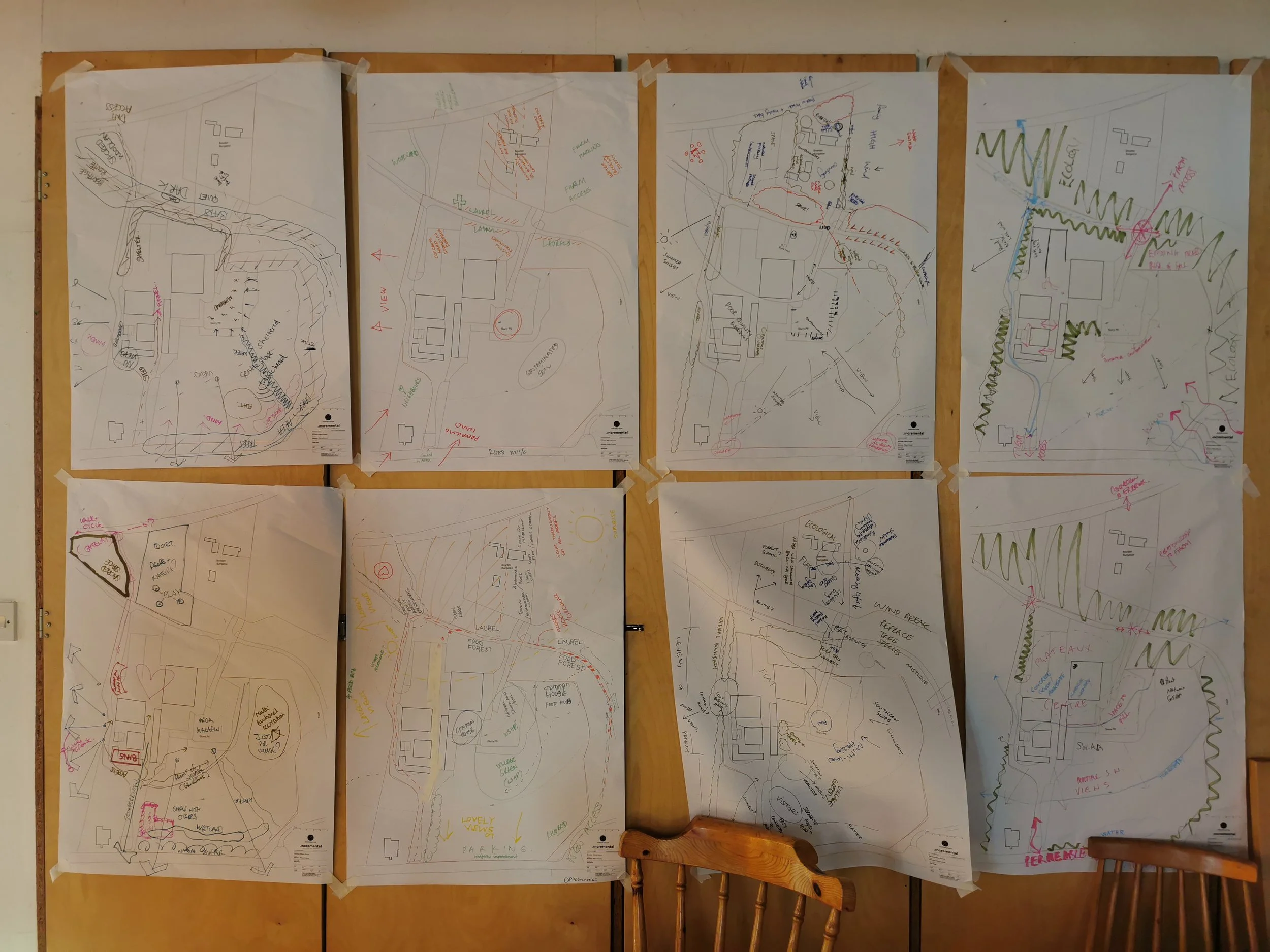
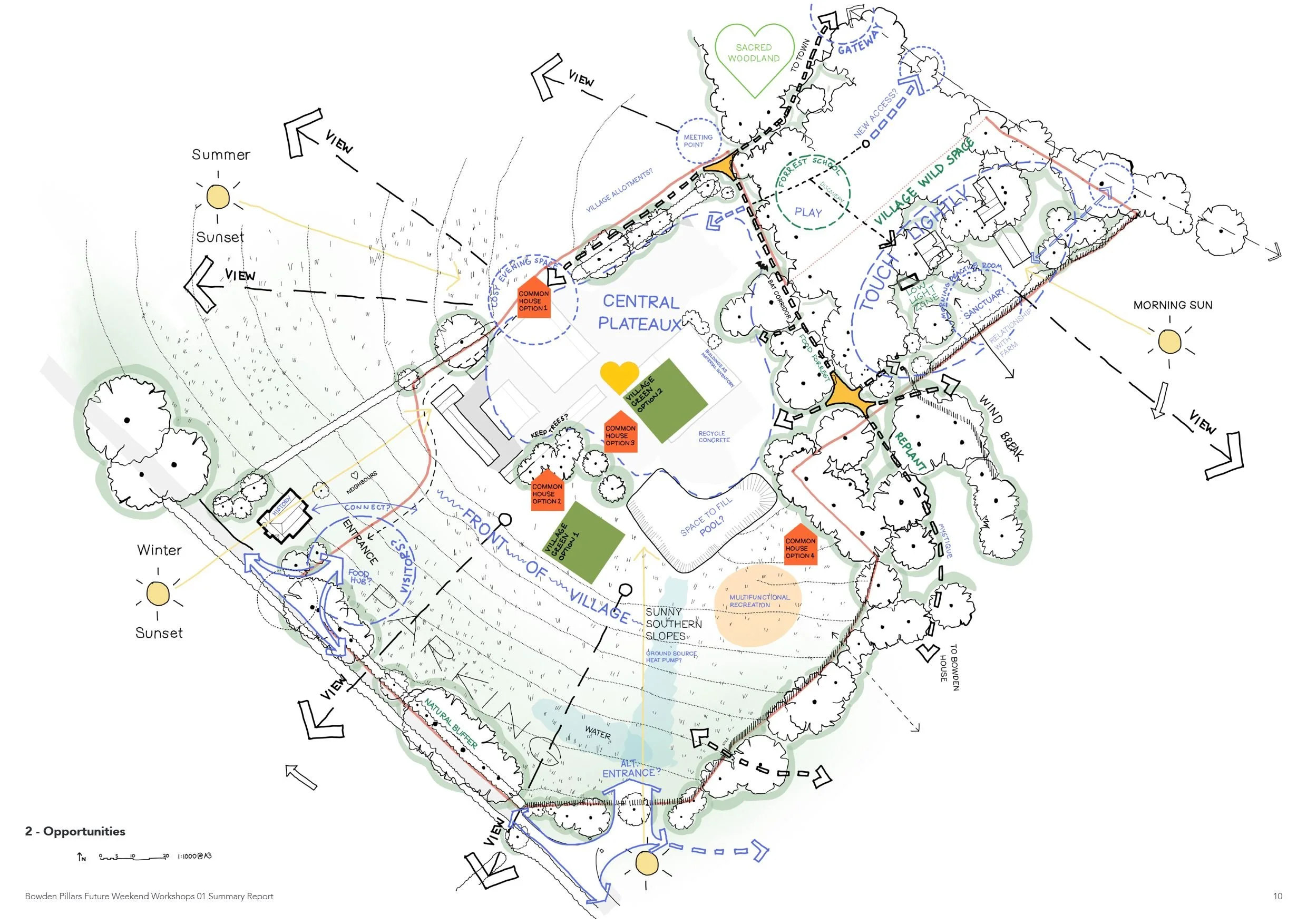
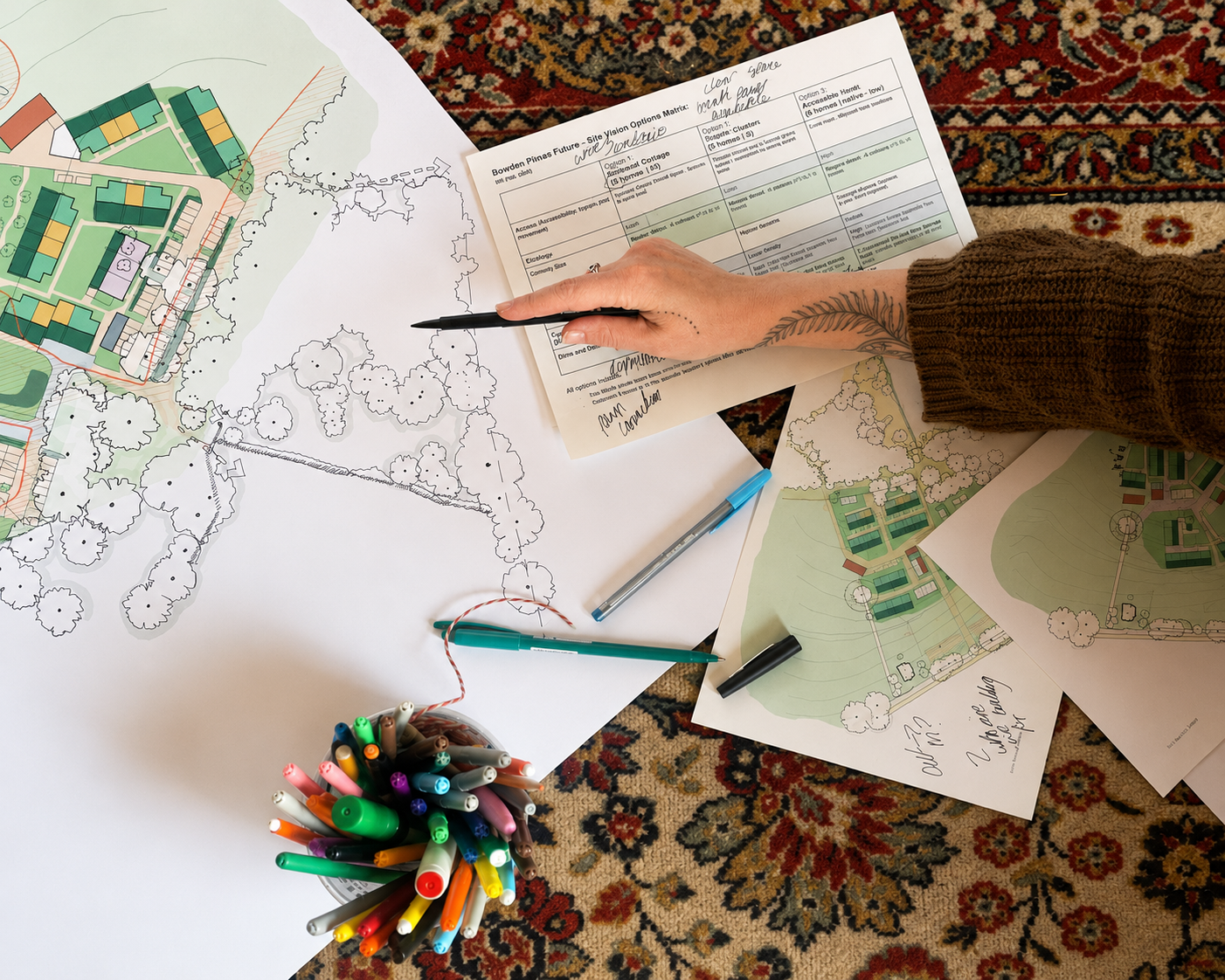
With our architects, we have held intensive design workshops on site. We walked the land together before placing a single building on the plan. We looked at aspects, wind, slope, trees, views and access.
Instead of choosing one layout, we are testing several different ways the village could be arranged. Some ideas were dropped. Others were combined. Each workshop builds the design.
Co-design means allowing decisions to evolve and not rushing them.
Read more about Co-Designing process (coming soon)
4. Regenerative Thinking in Every Detail
Regeneration shapes the way every part of this project is designed.
All of our consultants - from transport and energy to drainage and ecology - are briefed to work towards shared regenerative principles.
That means asking different questions from the start
How do we feed the village?
How do we generate the renewable energy we need?
How do we make the best use of water, a precious resource?
How do we weave people and wildlife throughout the site?
Can we build with materials that lock up carbon rather than increase emissions?
Regenerative thinking is thinking about how everything joins up and so needs to start early and run through the entire project.
Help us complete
the planning application
Where are we now
We are currently refining the masterplan and preparing for planning submission in the autumn 2026.
Designing a village takes time. It unfolds step by step as ideas are tested, studies are completed, and conversations with planners and specialists help shape the proposal.
Some parts of the project are already clear and guide every design decision. Other aspects are still being explored and refined as the work progresses.
Below is a snapshot of what is already established and what is still evolving as we move toward a planning application.
What is already established
The overall vision for Bowden Pillars as a regenerative village integrating homes, farming and nature recovery
The intention to create around 50 homes with a mix of sizes and tenures including co-living units for small households
A strong commitment to affordable housing as part of the community
The area of the site where the village is proposed, identified after considering planning constraints, topography, existing trees, ecological surveys and landscape sensitivity
The integration of shared spaces such as a common house, workspaces and food-growing areas
The principle of ultra-low carbon living, including renewable energy and resource-efficient homes
The partnership with a core design team including architects, landscape designers, specialists and planners
A co-design process involving the emerging community and wider project team
A structured planning dialogue with the local authority through a Planning Performance Agreement (PPA)
Ecological considerations informed by detailed surveys, helping identify habitats and species that need to be protected and integrated into the design.
What is still evolving
The detailed layout of the village and arrangement of homes and shared spaces
The exact housing mix and tenures within the community
The transport issues, including how best to ensure low-car living
Landscape and permaculture designs for the site
The detailed design of energy, water and drainage systems
The final form of shared buildings and community facilities
The full technical studies, reports and drawings required for the planning application.
Meet the Design Team
Designing a village like this takes many minds.
At the centre is a small core team. Design and Planning Circle work together weekly to guide the planning process and shape the design direction.
The Design & Planning Circle
These three organisations alongside members of the BPF Village Circle form the Design & Planning Circle.
This group steers the design and planning process day to day, working toward a successful planning application while staying true to the project’s wider vision.
Planning Lead & Client Representation - GEO
James Shorten - Planning Lead
Aleksandra Sliwa - Project Coordinator
Geo coordinates the planning application as a whole and are the planning specialists.
Coordinates all consultants and their work, provides the planning insight and expertise, leads discussions with the Local Planning Authority.
Lead Architects - Team Transition
Transition By Design and Incremental
Alex Towler - Project Lead
Charlie Palmer - Masterplan Lead
Melissa Kinnear - Regenerative Architect
Joyce Yiu - Architectural & Passive House Designer
Wongani Mwanza - Architect & Participatory Process Facilitator
Team Transition are leading the masterplan and architectural design.
They lead participatory workshops, testing different layout options and refining the spatial design of the village.
Their role is to turn the community’s vision and parameters into a coherent, buildable design that reflects the regenerative principles of the project at all levels.
Landscape & Permaculture - Landstory
Simon Brown - Lead Landscape & Permaculture designer
Kirsty Dougall - Landscape and visual impact assessment,
Landstory are covering the landscape and permaculture design as well as making sure the development proposals do not have any significant impact on the visual character of the surrounding countryside.
Their work knits together the open space in the village and beyond in to a single system covering shared spaces, water management, food growing, nature and new planting.
The village design responds to both the natural world and the forming community.
Meet our Core Design Team (coming soon)
Wider Consultant Team
A regenerative village requires specialist expertise across many fields.
Each consultant has been carefully briefed to work toward shared regenerative principles to go beyond mere compliance with standards.
Housing & Viability - Ecomotive – Thomas Beale
Housing and project management support, including mix, affordability and viability modelling - ensuring that the project remains deliverable while meeting its social ambitions.
Water & Drainage Engineering - WCI
Developing foul drainage, surface water strategy and infrastructure options with an emphasis on working with natural systems wherever possible.
Energy Strategy - Bioregional
Leading the energy and carbon strategy.
Their role includes exploring ultra-low energy homes, on-site renewables and pathways toward significantly reduced household carbon footprints.
Ecology - Devon Wildlife Consultants
Providing ecological surveys and guidance to protect and enhance biodiversity across the site, and helping ensure that the village goes well beyond current standards for weaving nature into design.
Transport - Craig Oakes
Assessing access, traffic impact and sustainable travel options, including strategies to reduce reliance on private car ownership.
Arboriculture - Doug Pratt Tree Consultancy
Surveying existing trees and advising on protection, retention and long-term landscape integration.
Lighting Design - The Lighting Bee
Designing low-impact external lighting to protect dark skies and minimise disturbance to wildlife.
Help us complete
the planning application
Village Journal
Working With the Planning Authority
Planning the village is a long and complex process. For Bowden Pillars, we have chosen to work with the local planning authority through a Planning Performance Agreement (PPA) - an optional framework that allows planners and the design team to work together as the proposal develops, helping address complex questions early and shape a stronger planning application.

What is a Planning Performance Agreement (PPA)?
Our whole approach is to work collaboratively, and this extends to the Local Planning Authority. Rather than submit an application and see what they think, using a PPA process means that we can work through the key issues the proposals raise with them to ensure that they have been discussed and addressed before the application is made.
Bowden Pillars is a very different sort of proposition. Planners are used to developers putting forward schemes which can fall short of expectations for affordable housing, on-site biodiversity, community benefits and carbon performance. Tense negotiations might follow, We are doing the reverse and exceeding expectations in many ways.
What other housing-led development brings a 75 acre community woodland, 35 acres of regenerative farming and locks in true net zero lives for residents?
But because we are so unusual there needs to be careful consideration of how to guarantee all of these benefits (which we want to do). We are testing planning conventions, in a good way, and all of this needs careful discussion.
Keeping people informed
This is a very exciting part of the process. As we reach important milestones we will be keeping South Hams Council, Totnes Town Council and local groups and individuals informed of our progress.
You can follow the journey in our Design & Planning Journal, where we will publish updates about design workshops, planning issues, technical studies and how the design evolves over time.
We’d also be pleased to hear from more local groups and individuals with a general or specialist interest in our work in addition to the valuable conversations we’re already having.